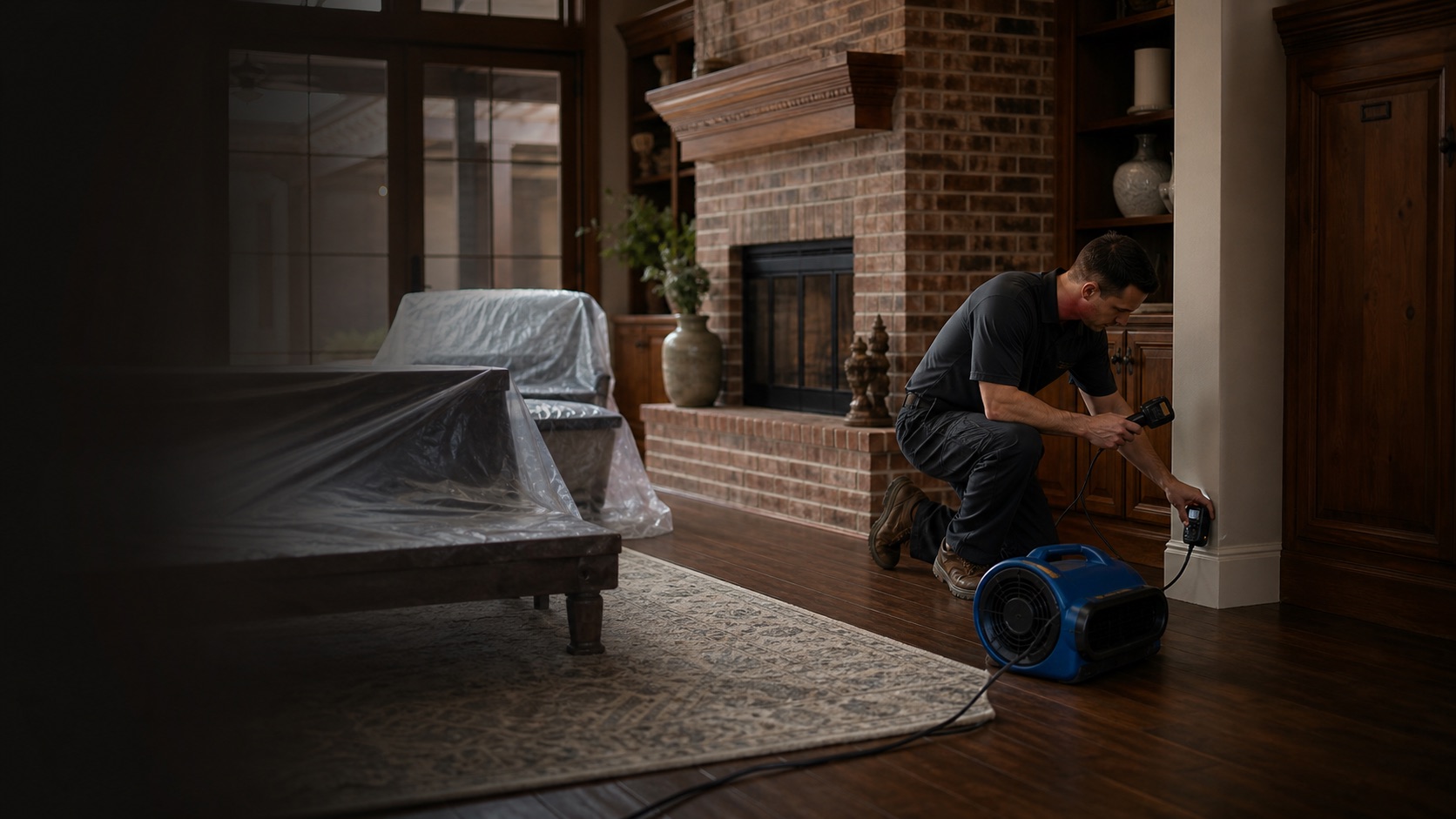
What needs assessment
Keep occupants and pets outside the affected area and describe which fixtures or drains backed up. A plumber or utility investigation may be needed to establish the cause. Report water movement between rooms and avoid operating fans that could spread contaminants before containment is addressed.
Three points to discuss
- Affected drain or fixture
- Waste-contact footprint
- Containment and disposal plan
Drying and material decisions
Ask about protective controls, removal of unsuitable porous materials, disposal, cleaning, and drying of remaining structure. The service provider should explain whether specialist remediation is available and what the property owner must arrange separately. Drain repair needs verification before the space returns to use.
Property context
Planning the work in Fort Worth
In Fort Worth, ask whether the observed water came from a pressurized line, a drain, a roof opening, or surface runoff. City stormwater information can support address-based outdoor-entry questions, but it cannot diagnose an indoor plumbing release. Record where water first appeared and whether the source was still active when it was discovered.
Fort Worth makes drainage studies, flood studies, permits, and elevation certificates available through its Stormwater Download Viewer. The city also identifies City Flood Risk Areas. Check the exact address and current city information when the loss involves runoff; an indoor pipe or appliance failure still needs its own source and material assessment.
Questions about this work
Should I run household fans after a sewage backup?
Avoid disturbing contaminated areas. A qualified provider should determine containment and the cleanup sequence before airflow is introduced.
What should I prepare before calling about this work in Fort Worth?
Give the exact address, the suspected source, the discovery time, affected rooms or levels, source repairs already completed, and any safety or access restrictions. Ask the responding provider to confirm current availability and the proposed initial scope.
How will I know when the affected materials are ready for repairs?
Ask for the final moisture or condition findings and the reasons supporting drying completion, cleaning, or removal. Any source problem or inaccessible area should be explained before finishes conceal the assembly again.
Sources and further guidance
Prepared October 7, 2026. General information; the proposed work should follow the conditions found at your property.