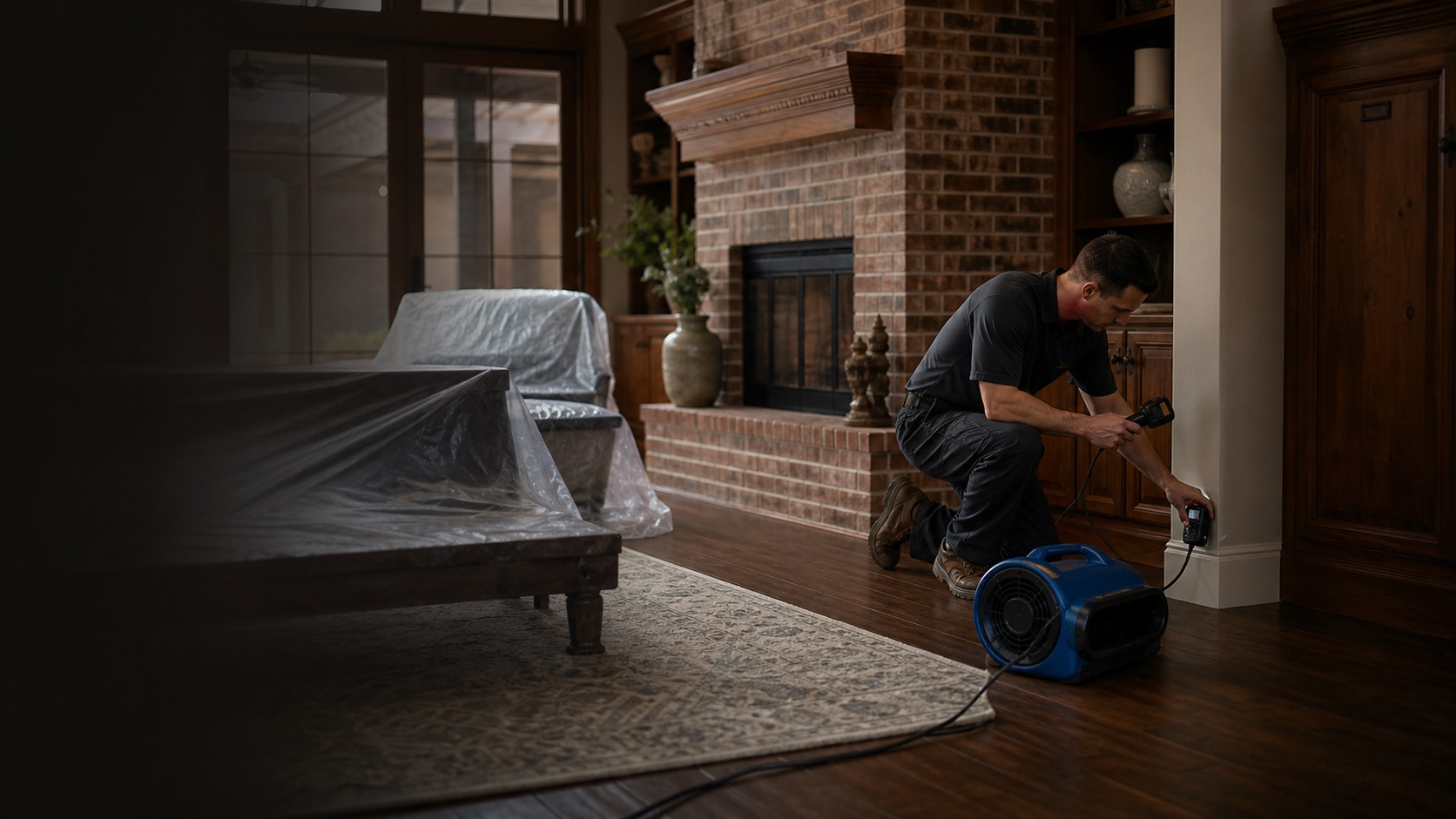
What needs assessment
Inspect the water pathway and delayed-discovery areas without disturbing suspected growth. Report the time materials may have stayed wet. EPA guidance emphasizes prompt drying after clean-water damage, but contaminated losses and existing mold need additional precautions.
Three points to discuss
- Exposure history
- Concealed porous materials
- Suspected existing growth
Drying and material decisions
Ask whether insulation, padding, or enclosed porous materials can be dried appropriately or require removal. Do not use ordinary airflow across suspected mold without professional guidance. A drying plan cannot guarantee that mold will never occur; source correction and follow-up matter.
Property context
Planning the work in Fort Worth
For a Fort Worth drying setup, ask how measurements connect to each affected material and what will change if readings stop improving. When runoff is involved, source correction may need drainage expertise alongside restoration. The city’s downloadable stormwater records can help with that later review, while immediate work addresses safe access, cleaning, and drying.
Fort Worth makes drainage studies, flood studies, permits, and elevation certificates available through its Stormwater Download Viewer. The city also identifies City Flood Risk Areas. Check the exact address and current city information when the loss involves runoff; an indoor pipe or appliance failure still needs its own source and material assessment.
Questions about this work
Does quick extraction guarantee no mold growth?
No. Hidden moisture, delayed discovery, material condition, and source recurrence can still create problems.
What should I prepare before calling about this work in Fort Worth?
Give the exact address, the suspected source, the discovery time, affected rooms or levels, source repairs already completed, and any safety or access restrictions. Ask the responding provider to confirm current availability and the proposed initial scope.
How will I know when the affected materials are ready for repairs?
Ask for the final moisture or condition findings and the reasons supporting drying completion, cleaning, or removal. Any source problem or inaccessible area should be explained before finishes conceal the assembly again.
Sources and further guidance
- Fort Worth stormwater records and review
- EPA: moisture control and mold cleanup
- FEMA Flood Map Service Center
Prepared October 7, 2026. General information; the proposed work should follow the conditions found at your property.